Plant Yourself merch designed by my daughter, Yael Zivan.

Habit Science

Six True Lies About Your Food Struggles

Do you binge because you’re eating for emotional reasons, or because your body isn’t designed to say no to hyper-palatable food?

To change how you eat, should you love yourself, or be tough on yourself?

And it is better to learn to eat intuitively, or to create hard and fast rules?

Read More

Is “Cheat” Really the Word You Want to Use?

When clients talk about “cheat days” and “cheat meals,” they’re fooling themselves in two very significant ways.

In this video, I talk about what “cheating” is and isn’t, and offer a different lens through which to think about goals and deviation from them.

Read More

Is “Cheat” Really the Word You Want to Use?

When clients talk about “cheat days” and “cheat meals,” they’re fooling themselves in two very significant ways.

In this video, I talk about what “cheating” is and isn’t, and offer a different lens through which to think about goals and deviation from them.

Read More

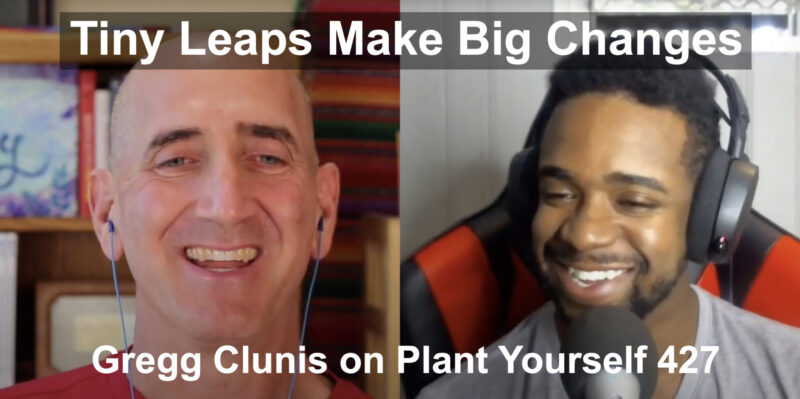
Tiny Leaps Make Big Changes: Gregg Clunis on PYP 427

Gregg Clunis learned most of what he knows about persistence, strategy, personal development, and success from watching his immigrant parents struggle to achieve their dreams. Originally from Jamaica, Gregg and his family followed his father, who had been a professor and police officer in their native country, and worked as a migrant farm laborer in their new home.

Gregg was attracted to the self-help world, and quickly discovered that the tactics and messages were often at odds with his perspective, and that of his generation in general. 

Read More

Steven C Hayes on PYP 425: How to Liberate Our Minds

Steven C Hayes is the originator of ACT (Acceptance and Commitment Therapy, or Acceptance and Commitment Training, take your pick), one of the most important psychological approaches of the past 100 years.

Why the high praise? For several reasons:

ACT is evidence-based
ACT is learnable
ACT is actionable
ACT can be practiced and shared by pretty much any human in any role, unlike most therapies that require degrees and certifications.
ACT is built from the ground up from fundamental theories of human cognition and behavior
ACT seeks to create mental health, rather than simply address mental illness

In our conversation, we tackled the question that has vexed so many philosophers: Why is it so damn hard to be a human?

Read More

Unraveling the Mysteries of Behavior: Mark Faries, PhD, on Plant Yourself 424

A key role of medical professionals whose job it is to help their patients and clients change, is to frame messages to maximize the odds of desired behaviors. Unfortunately, most medical professionals have been trained to communicate in ways that actually reduce patient self-efficacy by challenging their autonomy and undermining confidence in their competence.

On today’s podcast you’ll discover how to talk so patients will not only listen, but adopt positive new behaviors and maintain them in the face of ongoing temptation. 

Read More

Prudence, Paranoia, and Preparation: How to deal with habits that aren’t second nature yet

When you’re growing a new habit that isn’t second nature, you’ll face situations that tempt you to regress to your old default behavior.

Some people deal with this through naive invocations of willpower: “I’ll just be strong and say no.”

Others get paranoid, and start seeing danger and threat in every situation. Obviously, neither of these is the answer.

Today’s video shares the best solution that I’ve found.

Read More

The Key to Human Resilience with Scott Carney: PYP 413

Most of my work as a health coach involves helping people respond differently to stimuli.

That is, develop the ability to make different choices when confronted with tempting foods, tempting environments, tempting people, and tempting sensations, emotions, and thoughts.

Think about it – NOT having that ability basically means you’re a robot, a machine. If you can’t control your responses, you have no freedom.

Read More

How to Scare Yourself into Better Health

This week I got the shit scared out of me, and it was the best thing ever. Because I used two strategies to transform the fear while riding its energy.

Read More

Do You Want to Play a Game?: PYP 407

One of the hot trends in behavior modification is gamification – that is, turning our goals and activities into behavioral chunks in order to win points and, sometimes, prizes.

Gamification has its place, but there are a couple of pitfalls to watch out for.

How best to gamify, and when not to – these are the subjects of today’s podcast.

Read More