Plant Yourself merch designed by my daughter, Yael Zivan.

Podcast

Democracy Means a Healthy and Safe Environment for All: Jovita Lee on PYP 430

Today’s guest, Jovita Lee, is co-founder and vice president of Democracy Green, a North Carolina-based non-profit dedicated to environmental justice. 

The environmental movement has a long and shameful history of privileging certain parts of the environment over others. Specifically, it’s focused on preserving spaces enjoyed by the rich, and where the rich live. 

The result is a nation in which environmental racism condemns poor people and people of color – regardless of income and economic status – to lives cut short by chronic conditions caused and worsened by pollutants and climate instability.

Read More

Outlasting Broken and Unjust Systems: Meryl Fury on Plant Yourself 429

Meryl Fury is a registered nurse and CEO of the Plant-based Nutrition Movement. And she’s a fierce advocate for justice and sanity in a world lacking both.

Emblematic of her approach to life is the story of how she went vegetarian at the age of 15, to help her family make ends meet during the economic troubles of the mid-1970s. When her mother admonished her to continue eating meat to stay healthy, Fury refused, and even spat out the meat sauce coating her spaghetti.

Just as she outlasted her mother’s insistence 35 years ago, Fury is still striving to outlast the broken food and healthcare systems that disproportionately harm people of color. 

Read More

The Younger Skin Diet: Rajani Katta, MD, on PYP 428

I think that having healthy, attractive skin is probably a lot more motivating to most people than a healthy heart, or liver, or pancreas. I mean, those organs are great and all, and important, but they’re so, well, hidden. 

Out of sight and out of mind, at least until they malfunction.

Skin, on the other hand – it’s staring us in the face all day long. Hell, it is our face. And when our skin feels dry and paper, or sags, or gets spots and wrinkles, we don’t like that one bit. 

So the good news and the bad news is – our lifestyles can significantly affect the health of our skin. Diet, coping with stress, sleep quality – all these can fast forward aging, or slow it down, depending on our choices.

Read More

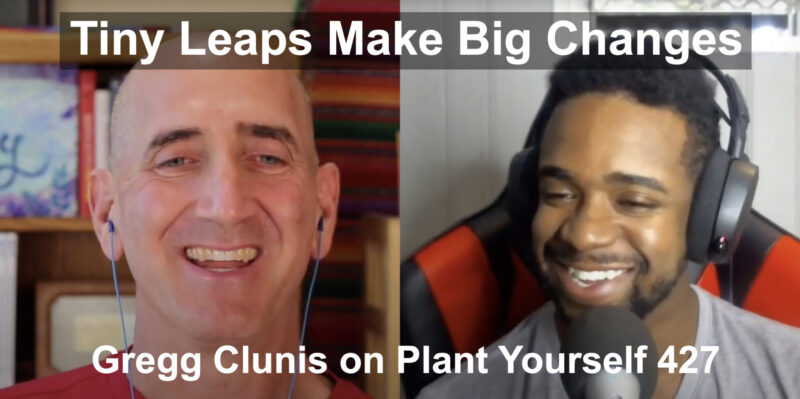
Tiny Leaps Make Big Changes: Gregg Clunis on PYP 427

Gregg Clunis learned most of what he knows about persistence, strategy, personal development, and success from watching his immigrant parents struggle to achieve their dreams. Originally from Jamaica, Gregg and his family followed his father, who had been a professor and police officer in their native country, and worked as a migrant farm laborer in their new home.

Gregg was attracted to the self-help world, and quickly discovered that the tactics and messages were often at odds with his perspective, and that of his generation in general. 

Read More

Creating a Platform for Black Plant-Based Health Experts: Judy Brangman, MD, on PYP 426

Judy Brangman, MD, aka The Plant-Based MD, visits the podcast to talk about her labor of love, the Reclaim Your Health Summit.

The summit is the first one featuring exclusively people of color in the plant-based healthcare space. Eighteen doctors, a dietitian, and a fitness expert all share their wisdom and action plans with Dr Brangman, and with everyone who signs up for this free event.

Read More

Steven C Hayes on PYP 425: How to Liberate Our Minds

Steven C Hayes is the originator of ACT (Acceptance and Commitment Therapy, or Acceptance and Commitment Training, take your pick), one of the most important psychological approaches of the past 100 years.

Why the high praise? For several reasons:

ACT is evidence-based
ACT is learnable
ACT is actionable
ACT can be practiced and shared by pretty much any human in any role, unlike most therapies that require degrees and certifications.
ACT is built from the ground up from fundamental theories of human cognition and behavior
ACT seeks to create mental health, rather than simply address mental illness

In our conversation, we tackled the question that has vexed so many philosophers: Why is it so damn hard to be a human?

Read More

Unraveling the Mysteries of Behavior: Mark Faries, PhD, on Plant Yourself 424

A key role of medical professionals whose job it is to help their patients and clients change, is to frame messages to maximize the odds of desired behaviors. Unfortunately, most medical professionals have been trained to communicate in ways that actually reduce patient self-efficacy by challenging their autonomy and undermining confidence in their competence.

On today’s podcast you’ll discover how to talk so patients will not only listen, but adopt positive new behaviors and maintain them in the face of ongoing temptation. 

Read More

What We Know About COVID-19: The Science: Michael Rothberg, MD on PYP 423

Michael Rothberg, MD, returns to Plant Yourself to share the latest actual scientific understanding of COVID-19. We spoke first in mid-March, when we didn’t know much. Fast forward five months, and we now know a lot, but in the US at least, we’re ignoring most of the science and suffering for it.

I’ve been as confused as anyone else, daunted by epidemiological models I can’t evaluate for accuracy, overwhelmed by social media fights about masks and free speech and hydroxychloroquine and vaccines and government overreach that have riven the plant-based community, and befuddled by competing claims of conferred immunity and how long it might last.

So I got Michael on the Zoom and peppered him with my questions.

Read More

The Stunning New Science of Breathing:
Dr Ryan Robinson on PYP 422

Ryan Robinson, DDS, is a unicorn in the medical world: a dentist who helps people open up their airways and learn how to breathe properly.

Breathe properly? What are you talking about?, I hear you say. If I’m alive, then I must be breathing properly, right?

Not exactly.

Read More

Are Your Mutual Funds Building the World You Want?: Marco Vangelisti on PYP 421

If you’re fortunate enough to have savings, you’ve probably thought about how to invest them responsibly. 

The standard answer is to stick your money into no-load mutual funds that track the market and leave it there for as long as possible. Low risk because of the diversification. Low fee because there’s no genius managing your money, just an algorithm. And high return because over the long term, it’s almost impossible to beat the market.

What could possibly be wrong with that?

Read More