Plant Yourself merch designed by my daughter, Yael Zivan.

Psychology

A Counterintuitive Mind Hack for When You Feel Like Giving Up

When your mind tells you that you’ll never change, and that you’re destined to keep struggling forever with diet, or exercise, or any other bad habit, it’s easy to convince yourself to give up.

But there’s a simple “mind hack” that you can employ, to change your inner dialog, that can give you the tools you need to keep making progress.

Read More

Six True Lies About Your Food Struggles

Do you binge because you’re eating for emotional reasons, or because your body isn’t designed to say no to hyper-palatable food?

To change how you eat, should you love yourself, or be tough on yourself?

And it is better to learn to eat intuitively, or to create hard and fast rules?

Read More

Civilization as a Self-Terminating Algorithm: Tyson Yunkaporta on PYP 436

Tyson Yunkaporta is an Australian Aboriginal artist, philosopher, and researcher who lectures on Indigenous Knowledge at Deakin University in Melbourne. He’s also the author of Sand Talk, a book that has influenced my thinking more profoundly than any other.

Basically, Yunkaporta turns the lens of anthropology around and puts Western civilization under the microscope, showing us how insane and unsustainable the entire project is.

Read More

Embracing Discomfort When You’re Already in Over Your Head: Glenn Murphy on PYP 434

Glenn Murphy returns to talk about the importance of embracing physical discomfort, even when we’re already stressed out mentally and emotionally. He offers some tips about how to do so without burning out, and shares a 10-minute guided visualization exercise to help us get back in touch with our bodies and spirits.

Read More

We Move, Therefore We Think: Barbara Tversky on PYP 431

Barbara Tversky argues that our thinking, and consciousness itself, arises from the experiences of our physical bodies in space.

Rather than being an afterthought, or just the province of athletes and dancers, spatial thinking is the foundation of all thought.

Read More

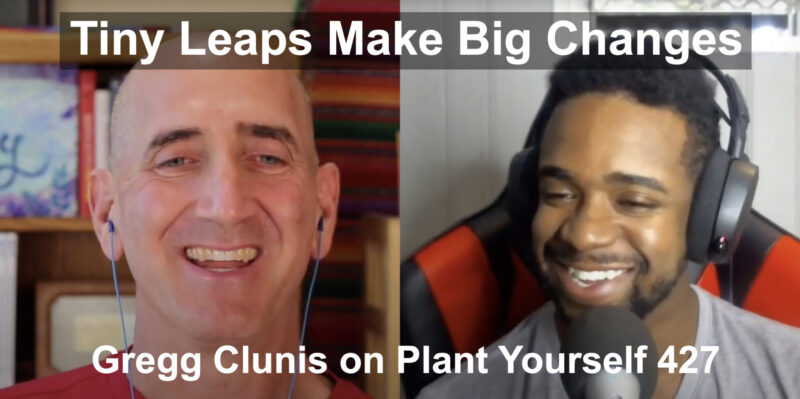
Tiny Leaps Make Big Changes: Gregg Clunis on PYP 427

Gregg Clunis learned most of what he knows about persistence, strategy, personal development, and success from watching his immigrant parents struggle to achieve their dreams. Originally from Jamaica, Gregg and his family followed his father, who had been a professor and police officer in their native country, and worked as a migrant farm laborer in their new home.

Gregg was attracted to the self-help world, and quickly discovered that the tactics and messages were often at odds with his perspective, and that of his generation in general. 

Read More

Steven C Hayes on PYP 425: How to Liberate Our Minds

Steven C Hayes is the originator of ACT (Acceptance and Commitment Therapy, or Acceptance and Commitment Training, take your pick), one of the most important psychological approaches of the past 100 years.

Why the high praise? For several reasons:

ACT is evidence-based
ACT is learnable
ACT is actionable
ACT can be practiced and shared by pretty much any human in any role, unlike most therapies that require degrees and certifications.
ACT is built from the ground up from fundamental theories of human cognition and behavior
ACT seeks to create mental health, rather than simply address mental illness

In our conversation, we tackled the question that has vexed so many philosophers: Why is it so damn hard to be a human?

Read More

Unraveling the Mysteries of Behavior: Mark Faries, PhD, on Plant Yourself 424

A key role of medical professionals whose job it is to help their patients and clients change, is to frame messages to maximize the odds of desired behaviors. Unfortunately, most medical professionals have been trained to communicate in ways that actually reduce patient self-efficacy by challenging their autonomy and undermining confidence in their competence.

On today’s podcast you’ll discover how to talk so patients will not only listen, but adopt positive new behaviors and maintain them in the face of ongoing temptation. 

Read More

Broccoli alone won’t get you to 100: Marta Zaraska on PYP 418

For the last 7 years, I’ve worked to improve human health and wellbeing by focusing on better nutrition, vigorous physical activity, sleep hygiene, and stress management.

Turns out I may have been missing the most important determinants of health – the social ones.

Marta Zaraska has written a book that is fun, fascinating, scientifically sound, and socially revolutionary. In Growing Young, she argues that eating well and exercising are all well and good, but spending time with friends, cultivating a positive attitude, and helping others are far more powerful (and enjoyable!) determinants of health.

Read More

Staying off the Trauma Train with Shay Seaborne: PYP 409

Shay Seaborne is a trauma survivor, educator, and activist dedicated to demystifying trauma and helping people heal from – and with – Complex Post Traumatic Stress Disorder (CPTSD).

In our far-ranging conversation, we covered the origins of trauma, the mistaken societal beliefs that reinforce trauma and get in the way of healing, and ways of empowering trauma survivors to reconnect with their bodies.

Read More